
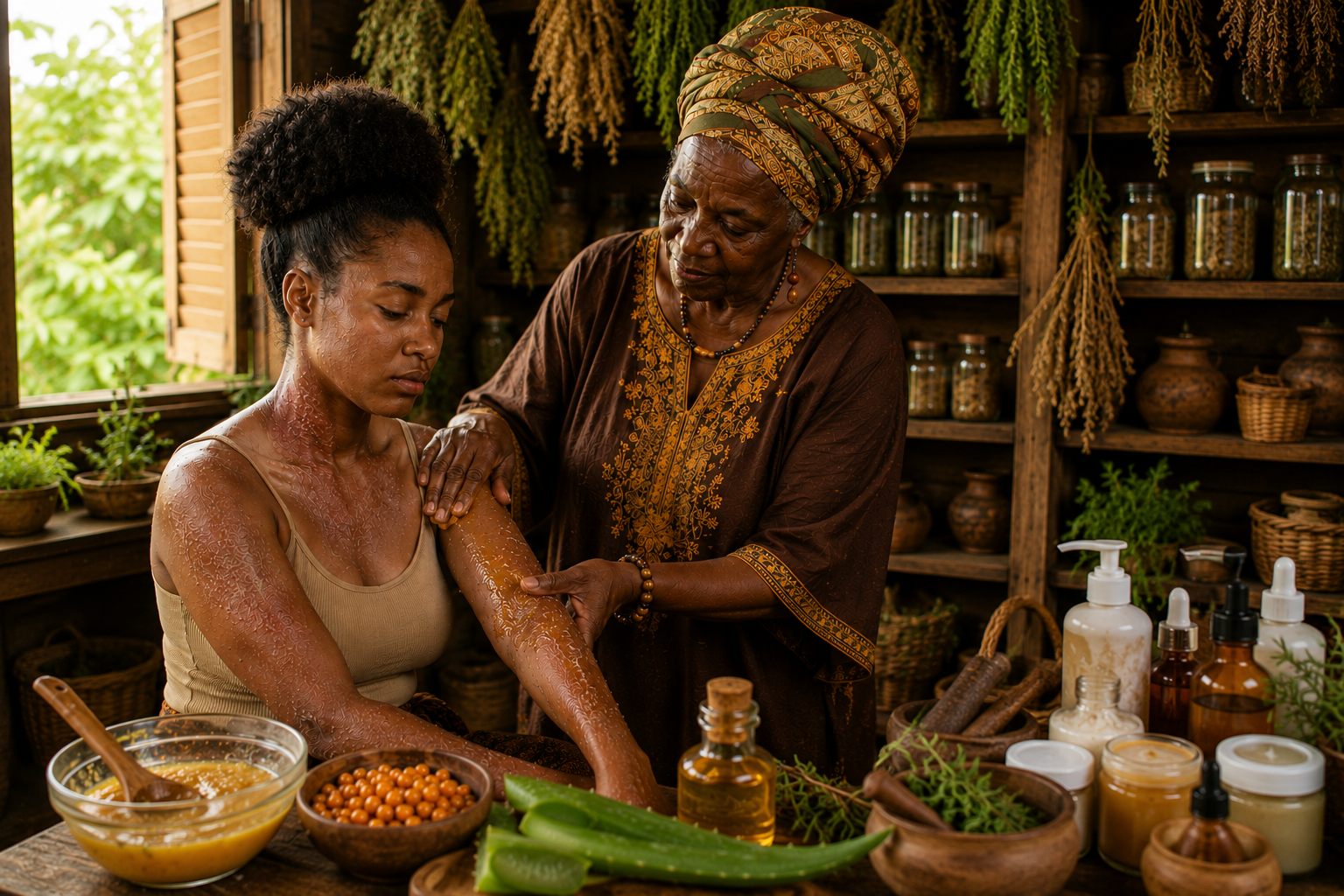
How to Calm Eczema & Dry, Irritated Skin Naturally Using Aloe Vera, Honey & Sea Buckthorn Oil
Natural Skin Care · DIY Treatment
How to Calm Eczema & Dry, Irritated Skin Naturally Using Aloe Vera, Honey & Sea Buckthorn Oil
A gentle, deeply soothing skin remedy that targets inflammation, barrier damage, and chronic dryness — using ingredients rooted in generations of natural skin care.
If you have been layering on stronger creams, prescription ointments, and medicated washes — and your skin is still angry, inflamed, and itching — the problem may not be what you are adding. It may be what you have not stopped.
Eczema is not just dry skin. When the skin barrier becomes weak and overwhelmed, it loses its ability to protect itself and hold moisture. Products that are too harsh, too fragranced, or too aggressive keep disrupting that barrier before it ever gets the chance to recover.
Aloe vera, honey, and sea buckthorn oil have been used for generations to calm, comfort, and support irritated skin. This combination does not mask the problem — it helps the skin rest and begin to repair from within. Used consistently alongside gentler daily habits, the irritation can slowly settle.
Why this combination works
What you need
How to prepare the soothing blend
- 1Extract fresh aloe gel from a leaf by slicing it open lengthwise and scooping out the clear inner gel — avoid the yellow latex layer just beneath the skin
- 2Add the aloe gel to a clean bowl and mix in the raw honey until smooth
- 3Add 3 to 5 drops of sea buckthorn oil and mix gently — a little goes a long way, as the oil is highly concentrated
- 4The finished blend should feel cool, slightly sticky, and richly coating — this is the texture you want
Prepare this fresh each time. The mixture can be kept refrigerated for up to 48 hours — a cool blend will also feel especially calming on inflamed skin.
How to apply
- Gently cleanse the skin first with a mild, fragrance-free soap — the goat milk soap works well here — and pat dry without rubbing
- Apply the aloe, honey, and sea buckthorn blend directly to affected areas using clean fingertips
- Massage very gently in slow circular motions — do not rub or press hard on inflamed or broken skin
- Allow the blend to absorb for 20 to 30 minutes before rinsing with lukewarm water
- Follow with a gentle, fragrance-free moisturizer while the skin is still slightly damp to lock in hydration
The oatmeal bath
On particularly inflamed or widespread flare days, an oatmeal bath can help calm the skin before applying the blend. Grind 1 cup of plain rolled oats into a fine powder and dissolve it in a warm — not hot — bath. Soak for 15 to 20 minutes, then pat dry gently.
What to stop doing
- Stop using heavily fragranced laundry detergents — residue stays in fabric and makes contact with your skin all day
- Avoid harsh body washes and soaps with sulfates, alcohol, or artificial fragrance on irritated areas
- Stay away from rough fabrics like wool directly on eczema-prone skin — cotton and bamboo are gentler options
- Avoid scratching, even when the itch is intense — it breaks the skin and opens the door to infection and deeper inflammation
- Do not use very hot water to shower or wash — it feels soothing in the moment but damages the skin barrier further
Supporting the skin from the inside
The skin is often reflecting what is happening inside the body. Chronic stress, dehydration, and inflammation can all make eczema flares more frequent and more severe. Drinking enough water, reducing processed and inflammatory foods, and managing stress levels can make a meaningful difference alongside any topical routine.
Certain foods — dairy, gluten, eggs, and soy — are common triggers for some people. Keeping a simple skin diary to track flares alongside what you eat and how you feel can help you identify personal patterns over time.
How often to use it
Apply the soothing blend once daily during active flares. As the skin calms, you can reduce to three to four times per week as a maintenance routine. The oatmeal bath can be done two to three times per week during periods of significant irritation.
What to expect and when
Eczema responds slowly — but when the skin is no longer being disrupted by harsh products and irritants, it does begin to stabilize. The moment the itching quiets and the patches start to soften is the sign that the barrier is beginning to recover.
If you want a complete system of herbal skin and body remedies — not just one recipe — Grandma put together a full guide with treatments for eczema, dryness, inflammation, hair care, and more. Everything in one place, the way she learned it.
Get the Book →All the goodness, none of the prep. These are the ready-made products formulated with the same gentle, barrier-supporting ingredients — and actually deliver results for sensitive, eczema-prone skin.
A deeply nourishing balm made for sensitive and eczema-prone skin. Tallow closely mimics the skin’s natural oils, helping to restore the moisture barrier and calm persistent irritation gently.
Shop nowA mild, creamy goat milk soap that cleanses without stripping the skin barrier. Rich in lactic acid and fatty acids that support softness and calm dryness with every wash.
Shop nowFrequently Asked Question
Can I use sea buckthorn oil directly on broken or weeping eczema skin? It is best to wait until any open or actively weeping patches have begun to close before applying sea buckthorn oil directly. The oil is highly potent and may cause stinging on broken skin. Use the aloe and honey blend alone on raw areas first, then introduce the sea buckthorn oil as the skin starts to heal and close over.
Sometimes the skin is not broken beyond repair. It is simply overwhelmed and asking for something gentler.
Stop disrupting it. Start supporting it. Stay consistent. The calm will come back.