Stop Throwing Away Your Papaya Seeds — Grandma’s Black Rice & Rosemary Tonic for Bald Spots and Thinning Edges
Zero-Waste Hair Care · Bald Spots & Thinning Edges
Stop Throwing Away Your Papaya Seeds — Grandma’s Black Rice & Rosemary Tonic for Bald Spots and Thinning Edges
If your bald spots keep getting bigger and your edges keep getting thinner, the answer may be sitting inside the fruit you already eat — in the part most people wash straight down the sink without ever wondering what is inside.
If your bald spots keep getting bigger and your edges keep getting thinner — stop throwing this away.
Everybody loves the sweet papaya. The flesh gets eaten, and the small glossy black seeds inside get scooped out and washed straight down the sink without a second thought. Most people never even wonder what is inside them. Grandma Bridget always has.
Those little seeds naturally contain antioxidants, healthy fatty acids, minerals, and plant compounds that help support a healthy scalp. And healthy hair always begins with a healthy scalp. That is not a new idea — it is simply one that got lost somewhere between the pharmacy shelf and the convenience of products that promise everything and address very little.
Blended and combined with fermented black rice water and fresh rosemary, papaya seeds become a tonic that goes directly onto the scalp — targeting bald spots, weak edges, and thinning areas with the kind of consistent nourishment they have rarely received. Simple ingredients. Powerful routine. Patience required.
What each ingredient does
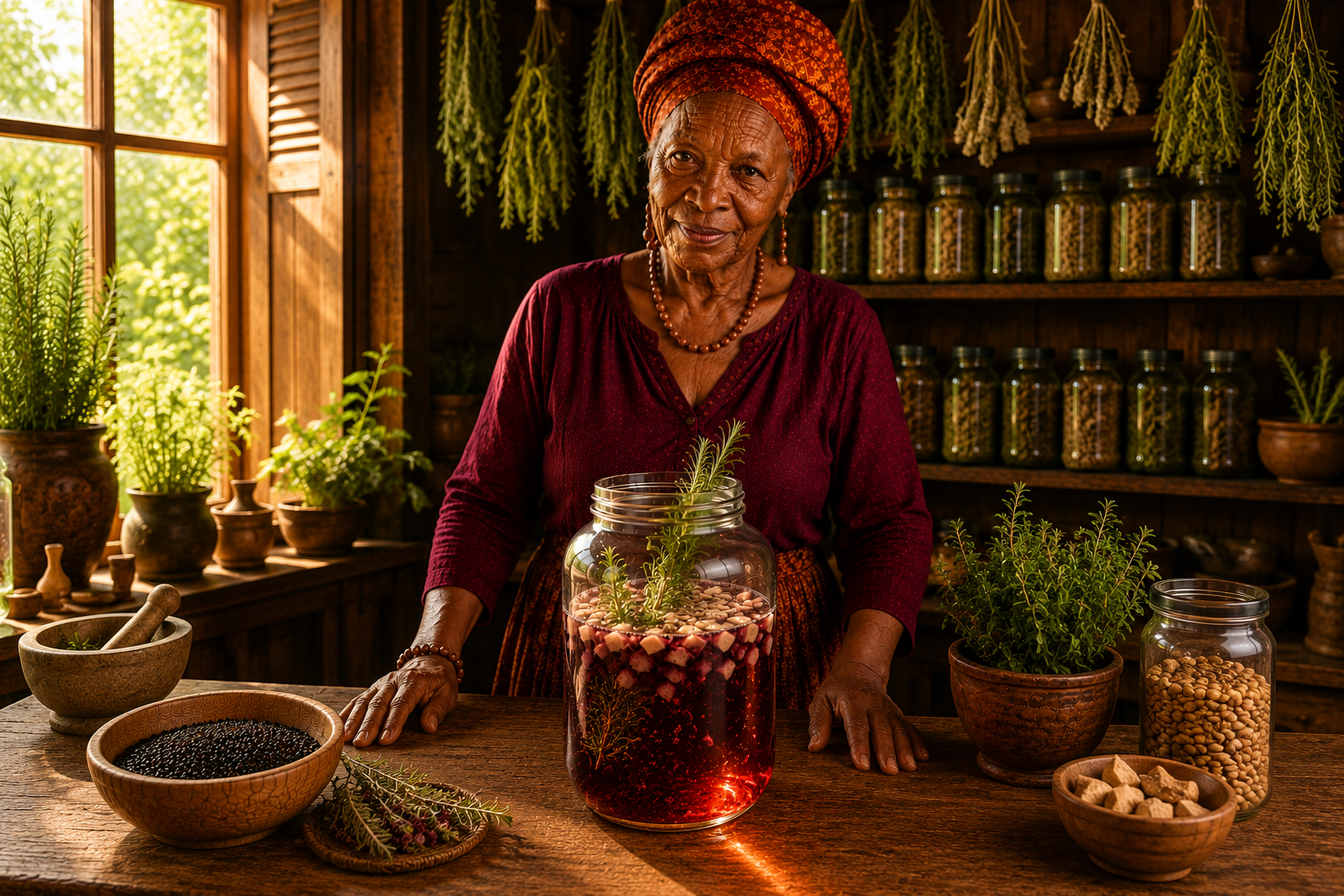
What you need
Black rice is available in health food stores and Asian grocery shops — look for it labelled as forbidden rice or purple rice. Do not substitute with regular white or brown rice. The anthocyanins in black rice are what make this tonic significantly different from standard rice water.
How to prepare it
Step 1 — Ferment the black rice water (start here, 24 hours ahead)
- 1Measure the black rice into a clean bowl and rinse once with plain water — then drain that rinse water away completely
- 2Add distilled water to the rinsed rice — always use distilled, not tap, as tap water can interfere with the fermentation process
- 3Transfer everything into a clean glass jar, seal the lid, and leave it at room temperature for 24 hours — after 24 hours the water will have turned a deep, rich purple. That colour is the anthocyanins you are waiting for
- 4Strain the fermented black rice water into a clean bowl and set aside — this is the base liquid for your tonic
Step 2 — Prepare the papaya seeds
- 5Slice open a ripe papaya and scoop the black seeds into a clean bowl
- 6Rinse the seeds briefly under cool water to remove any remaining papaya flesh
- 7Add the cleaned seeds to the blender — breaking them open is the whole point, because that is how the water reaches more of what is inside
Step 3 — Blend everything together
- 8Add a small amount of the fermented black rice water to the blender with the papaya seeds — just enough to help the blending process
- 9Gently rub the rosemary sprigs between your fingers to release their oils, then add them into the blender
- 10Pour the remaining fermented black rice water into the blender over the papaya seeds and rosemary — simple ingredients, powerful combination
- 11Blend everything together until smooth — the mixture will turn a rich, deep colour as everything works together
Step 4 — Strain and bottle
- 12Pour the blended mixture through a fine mesh sieve into a clean bowl — strain slowly and press the pulp firmly to extract every drop of liquid
- 13Only the tonic goes into the bottle — discard the pulp completely
- 14Pour the finished tonic into a clean applicator or spray bottle — the tonic is now ready
Store the bottle in the refrigerator and use within 5 to 7 days. Make a fresh batch after that. Do not leave it at room temperature — the fermented base means it does not keep long once bottled.
How to apply it
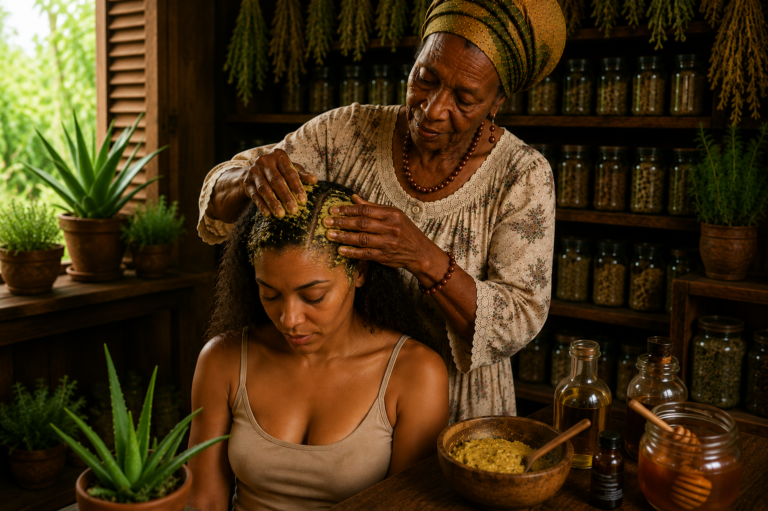
- Always start with the scalp — that is where healthy hair begins
- Section the hair carefully so the tonic reaches the scalp directly, not just the surface of the hair
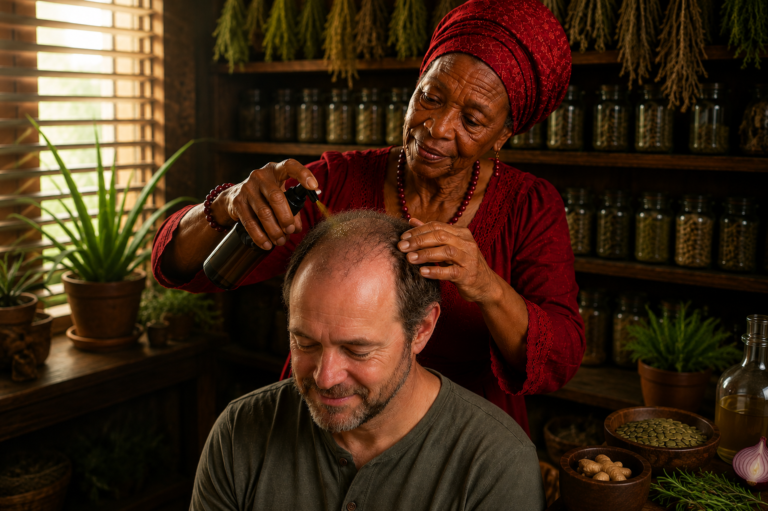
- Apply the tonic directly to bald spots, thinning edges, the crown, and any other areas of concern
- Massage gently with your fingertips using slow circular motions immediately after applying — never rush your scalp, a few minutes of calm, consistent massage is far more effective than a rough, hurried one
- Leave it to absorb naturally — there is no need to rinse it out
Focus your application time on the specific areas that concern you most — bald spots and edges need concentrated attention, not a general all-over soak.
How often to use it
Two to three times each week. Consistency always beats intensity — applying this three times a week without missing is far more effective than applying it every single day for two weeks and then stopping when results feel slow.
What to expect and when
Healthy hair does not happen overnight. It grows one good habit at a time. The moment you commit to showing up for your scalp consistently — two or three times a week, every week — is the moment things begin to shift.
Frequently Asked Question
Can I use this tonic on completely bald areas with no hair at all? Yes — apply it directly to the scalp skin over the bald area. The tonic works at the follicle level, not the strand level, so the absence of visible hair does not prevent it from working. Follicles that have been dormant for a shorter period respond better than those that have been inactive for many years. The earlier you begin consistent care, the better the environment you create for potential regrowth.
Most people never give the papaya seeds a second look. Grandma Bridget has never washed them down the sink.
Scoop them out. Blend them. Combine with black rice water and rosemary. Strain it. Apply it. Massage gently. Come back two days later and do it again. Healthy hair grows one good habit at a time.
Grandma wrote down every remedy, tonic, herbal drink, oil, meal plan, and natural hair routine she knows — for bald spots, edges, thinning hair, growth, moisture, scalp health, skin care, and more. Fifty pages of what has been passed down and proven to work. Everything in one place, the way she learned it.
Get the Book — $19.99 →If sourcing papaya seeds and fermenting black rice is more than you can manage right now, this is the ready-made option Grandma recommends — concentrated scalp support in a spray bottle, targeting bald spots and thinning edges directly, ready to apply from day one.
A concentrated herbal scalp spray that supports bald spots and thinning edges with consistent daily use — the same targeted scalp approach as this tonic, bottled and ready to apply without any preparation needed.
Shop now